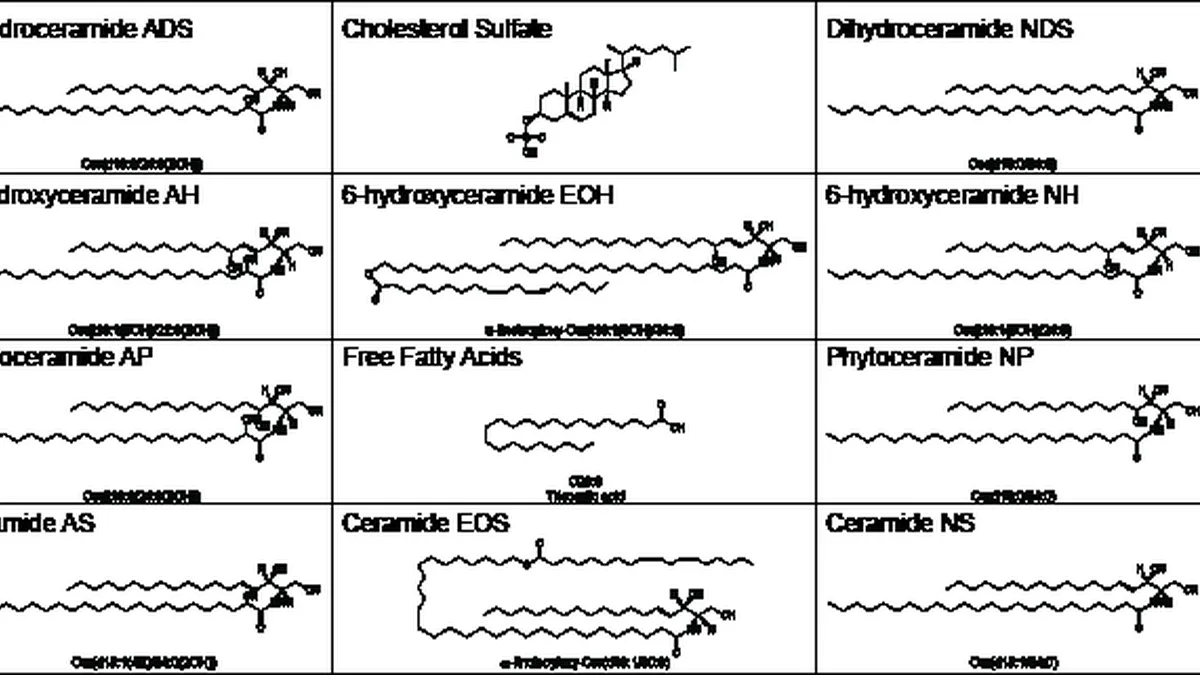
Ceramides
Origin and history
Ceramides are a class of lipid molecules that are a fundamental structural component of the skin's stratum corneum, or outermost layer. Their critical role in the skin barrier was first identified and documented by scientific researchers in the mid-20th century. The foundational understanding of the lipid bilayer structure of the stratum corneum, where ceramides are key players, was established through biomedical research in the 1960s and 1970s. The initial ceramides used in topical skincare were not synthetic but were derived from bovine brain tissue or plant sources. The commercial application of ceramides in cosmetic formulations began in earnest in the 1980s, following growing scientific consensus on their function. Today, the ceramides used in skincare are predominantly bio-identical synthetics or derived from plant oils, developed for stability and ethical consistency.
What it is designed for
Ceramides are designed to repair, restore, and maintain the skin's natural barrier function. A compromised barrier leads to transepidermal water loss (TEWL), resulting in dryness, sensitivity, and irritation. Topically applied ceramides are intended to integrate into the skin's lipid matrix, helping to fill gaps and reinforce the protective structure. This reinforcement is crucial for treating conditions like eczema, psoriasis, and severe xerosis (extremely dry skin), where barrier deficiency is a primary characteristic. By bolstering the barrier, ceramides also help shield the skin from environmental aggressors like pollutants and irritants. Their function is fundamentally supportive, creating an optimal environment for the skin to heal itself and for other active ingredients to work more effectively without causing inflammation.
Development and versions
Early skincare formulations containing ceramide-like ingredients often used simpler occlusives and emollients that mimicked the feel but not the identical structure. The first generation of true cosmetic ceramides in the late 20th century were complex and expensive to produce, limiting their use to premium clinical brands. Scientific advancement led to the identification of specific ceramide subtypes prevalent in human skin, notably Ceramide NP, AP, and EOP, which are now commonly replicated. Modern versions utilize pseudo-ceramides, which are synthetic molecules engineered to perform an identical barrier-repair function with greater formulation stability and at a lower cost. The development of liposome and nanoparticle encapsulation technology further improved the delivery of these lipids into the skin's layers. Current research focuses on ceramide precursors, like phytosphingosine, which the skin can use to synthesize its own ceramides, offering a different mechanistic approach.
Ceramides guide
Ceramides in skincare products are rarely listed simply as "ceramide"; they appear under specific INCI names that denote their chemical structure. Common synthetic ceramides include Ceramide NG, Ceramide NP, Ceramide AP, and Ceramide EOP. Plant-derived ceramides may be listed as ceramides from wheat, rice, or sweet potato. Cholesterol and fatty acids are crucial companion ingredients, as the optimal skin barrier repair requires a specific molar ratio of ceramides, cholesterol, and free fatty acids. Products formulated with this "skin-identical lipid ratio" (often cited as a 3:1:1 or similar proportion) are considered more physiologically effective. Ceramide concentrations are typically low, often below 1%, as their efficacy relies on integration into the skin's architecture rather than high dosage. They are found across product types, including cleansers, toners, serums, and most effectively in moisturizers and occlusive creams where they can be supported by a hydrating base.
Overview
Ceramides constitute approximately 50% of the intercellular lipids that hold skin cells together in the stratum corneum, acting as the mortar between the bricks of corneocytes. This lipid matrix is essential for preventing excessive water loss and blocking the entry of pathogens and irritants. In skincare, ceramides are considered a cornerstone ingredient for barrier repair, functioning more as a essential maintenance component than a transformative active like a retinoid or acid. They are highly compatible with virtually all other skincare ingredients, including the most potent actives, as they help mitigate the barrier damage those actives can cause. Their efficacy is well-supported by decades of dermatological research and clinical studies, making them a staple in therapeutic moisturizers. The benefit is cumulative and preventative, improving skin resilience over time rather than providing an immediate visible change.
What to know
Ceramide-containing products do not typically produce a dramatic overnight visual result; their effect is measured in reduced irritation, improved hydration, and less reactive skin over weeks of use. They are non-comedogenic and suitable for all skin types, including oily and acne-prone skin, as a healthy barrier regulates oil production and reduces inflammation. While beneficial alone, ceramides are most effective when formulated alongside humectants like glycerin or hyaluronic acid to attract water, and occlusives like petrolatum or squalane to seal it in. They are exceptionally stable molecules and are not degraded by light or air, unlike some vitamins, so packaging is less critical. There is no risk of "overuse" or developing a tolerance to ceramides, as they are replenishing a natural, constantly depleted skin component. Patch testing is still advised, as the vehicle formulation (creams, lotions) may contain other ingredients that could cause a reaction.
Common questions
A common question is whether ceramides can cause purging; they do not increase skin cell turnover and therefore cannot cause a purge, which is a reaction specific to actives like retinoids. Users often ask if they need a separate ceramide product; while beneficial, many moisturizers already contain ceramides, so checking ingredient lists can prevent unnecessary layering. Another frequent inquiry is regarding the difference between ceramides and peptides; ceramides are lipids that repair the skin's barrier, while peptides are amino acid chains that typically signal the skin to produce more collagen. People wonder if ceramides are suitable for fungal acne; most synthetic ceramides are safe, but it is vital to avoid formulations that also contain fungal-feeding oils or fatty esters. Questions about combining ceramides with exfoliating acids are common, and this is generally a recommended practice to counteract the potential barrier disruption from acids. Finally, many ask about the shelf life, which is typically long (often 2-3 years) due to the stability of the molecules.
Pros and cons
The primary advantage of ceramides is their exceptional safety profile and fundamental role in maintaining skin health, making them a universally applicable ingredient with virtually no contraindications. They effectively reduce trans epidermal water loss, calming sensitivity and diminishing the tight, uncomfortable feeling associated with a damaged barrier. A significant con is that results are subtle and not immediately glamorous, leading some users to abandon products prematurely in search of more dramatic changes. The common mistake is using a ceramide product but simultaneously employing harsh cleansers or over-exfoliating, which continuously damages the barrier faster than it can be repaired. Those who regret choosing ceramide-focused products are often individuals seeking quick fixes for wrinkles or hyperpigmentation, for which ceramides are not directly targeted. Furthermore, some commercial products list ceramides far down the ingredient list in minuscule, ineffective concentrations, creating a perception of inefficacy when the formulation is simply inadequate.
Who it suits
Ceramides are supremely suited for individuals with chronically dry, dehydrated, or sensitive skin, including those diagnosed with eczema, rosacea, or psoriasis where barrier impairment is central. They are ideal for anyone undergoing medical skin treatments like retinoid therapy, chemical peels, or laser procedures, as they support recovery and minimize irritation. Individuals living in harsh climates with low humidity or extreme temperatures benefit significantly from the added barrier protection ceramides provide. They are also a prudent choice for those with aging skin, as natural ceramide production declines with age, contributing to dryness and fragility. People with oily or acne-prone skin will find ceramides helpful in restoring a balanced barrier, which can reduce compensatory oil production and improve the skin's overall tolerance to acne treatments. Essentially, anyone seeking to improve their skin's long-term resilience and health, rather than target a single specific concern, will find value in incorporating ceramides.